

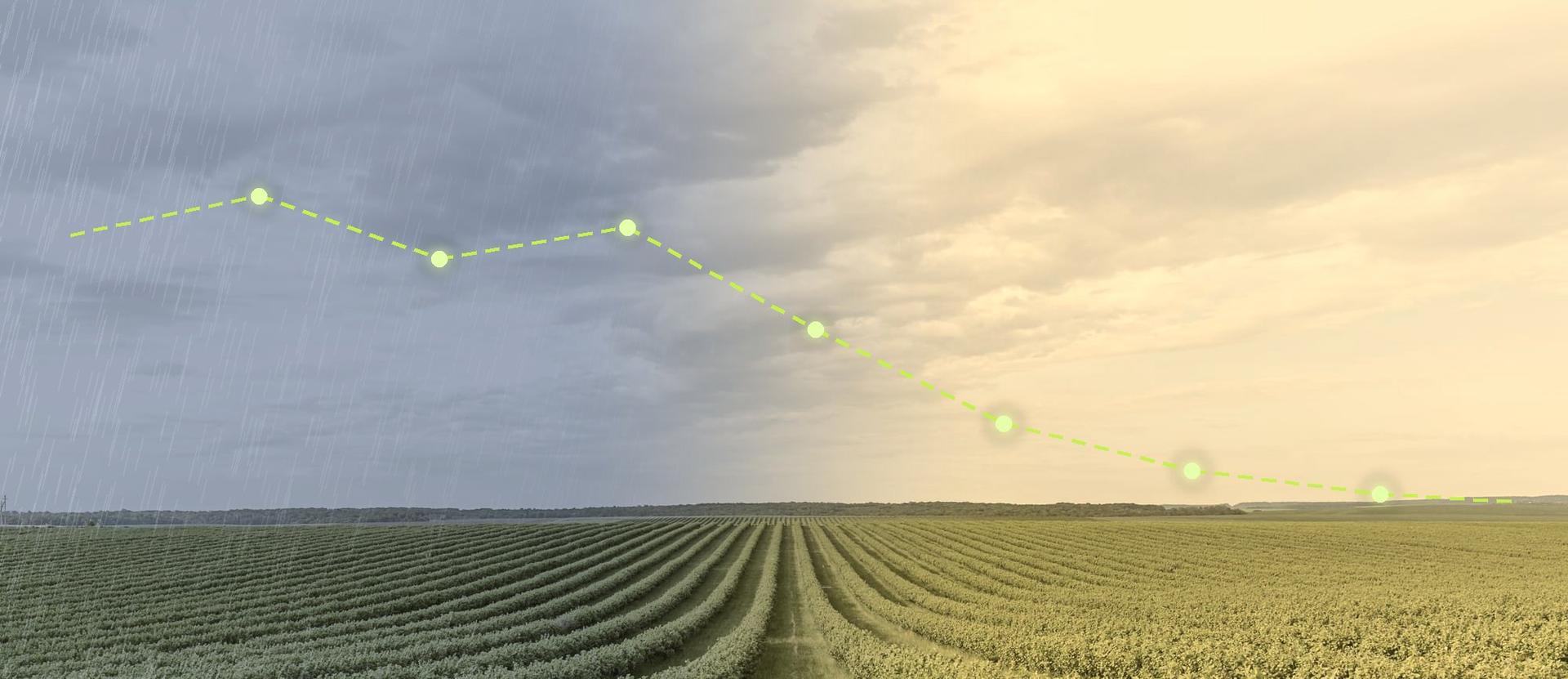
This season is asking farms to prepare for two opposite problems, one after the other.
The Northeast Monsoon 2026 began on 27 October, according to the Malaysian Meteorological Department (MetMalaysia), with three to five episodes of prolonged heavy rain expected between November and January (The Star, 23 October). Then, towards the end of the monsoon — especially from late January to March 2027 — MetMalaysia expects hotter and drier weather as El Niño strengthens (The Star, 27 October).
Malay Mail summed it up in one headline: heavy rain, then heat.
For a farm manager, that means the decisions you make in the wet weeks decide how well you get through the dry ones.
What does the Northeast Monsoon 2026 mean for Malaysian farms?
In short: two phases, and very little time between them.
Phase one, now until around January — too much water. Prolonged heavy rain brings the usual monsoon risks: flash floods in low-lying and riverside areas, waterlogged blocks, washed-out field roads and harvesting delays. Flash floods have already hit the Klang Valley in early November (The Rakyat Post), and flood incidents were reported in states including Perak, Kedah and Negeri Sembilan as the monsoon began (Malay Mail). In Perak, Bernama reported on an oil palm smallholder harvesting fresh fruit bunches by boat (Bernama).
Phase two, from late January — too little water. MetMalaysia's long-range outlook, updated on 5 November, says the monsoon should last until March 2027, that El Niño is strong and expected to strengthen further, and that slightly below-average rainfall is expected over northern Peninsular Malaysia and eastern Sabah (MetMalaysia long-range outlook, PDF).
So this is not a flood season or a drought season. It is both, back to back.
Why a wet start can make a dry finish worse
It is tempting to treat the two phases as separate problems and deal with the drought "when it comes". That usually costs more.
A few reasons the wet phase shapes the dry phase:
- Fertiliser applied before heavy rain is easily lost. Runoff and leaching carry nutrients away from the root zone. Palms and paddy then go into the dry, hot months already short of what you paid for.
- Waterlogged soil damages roots. Roots that sit in saturated soil for days are weaker when the soil later dries out and the crop needs to pull water from deeper down.
- Missed harvest rounds become a backlog. When field roads are cut, rounds slip. Overripe and uncollected bunches are lost crop, and the backlog lands on top of the dry-season workload.
- Rain that runs off is water you cannot use later. For farms with ponds, drains or small reservoirs, the wet weeks are the cheapest time to fill and hold water for February and March.
The drought side of the story is the one we covered in detail in our El Niño 2026 farm checklist, including why the impact on oil palm yield tends to show up months later. This post is about the transition — what to do while it is still raining.
How should oil palm estates prepare?
Start with access and drainage, then protect inputs, then think about water storage.
During the heavy-rain weeks
- Map which blocks flood first. Note every block where water stands for more than a day after heavy rain, and every road section that becomes impassable. This list will be roughly the same next year, and the year after.
- Clear drains and outlets before each forecast rain episode, not after. A blocked culvert turns a short downpour into days of standing water.
- Plan harvest rounds around access, not the calendar. Prioritise reachable blocks during rain episodes and catch up on the cut-off blocks as soon as roads reopen, rather than letting the whole schedule slide.
- Hold back fertiliser on blocks that are waterlogged or where heavy rain is forecast. Reschedule rather than skip — the palms will need those nutrients going into the dry months.
- Record flood duration and damage per block. Date the water arrived, date it drained, roads affected, rounds missed.
Before the dry phase arrives
- Fill and protect water storage while rainfall is still reliable.
- Put mulch back on the ground. Frond stacking and empty fruit bunch mulch help hold soil moisture once the rain stops.
- Prepare for fire risk on peat and near boundaries, since dry, hot conditions late in the monsoon raise it again.
How should paddy farmers prepare?
Paddy feels both phases quickly, because water timing drives the whole crop.
- Know your field's flood history. Fields that flooded in past monsoons are the likeliest to flood again. Plan nursery and transplanting timing with that in mind, and keep seed in reserve where you can.
- Keep bunds and field drains in working order so excess water can be released quickly after each rain episode.
- Talk to your scheme or IADA office early about the next season's water. If you are in a northern granary area, MetMalaysia's below-average rainfall outlook for northern Peninsular Malaysia is directly relevant. Water allocation decisions are made before planting, not during. No 2027 off-season schedule has been published yet, but MADA has already warned of limited water in its three dams this season and urged farmers to use water carefully, so watch for its next irrigation notice.
- Record what each field received and when. Rainfall, flood days and irrigation dates are what you will need if yields fall and you have to explain why to a buyer, a bank or an insurer.
What to record this monsoon
If you do only one thing differently this season, make it this: keep a simple, dated record per block or per field. It costs little now and is very hard to rebuild later.
A practical minimum:
- Rainfall — a rain gauge reading per block, weekly at least. MetMalaysia's agroclimatic guidance puts optimal monthly rainfall at about 200–300 mm for paddy and 150–200 mm for oil palm (MetMalaysia agroclimatic outlook). Comparing your own readings against those ranges tells you when a block has gone from "too wet" to "too dry".
- Flood events — start date, end date, depth if you can estimate it, and which roads were cut.
- Missed or delayed harvest rounds — per block, with the reason.
- Fertiliser applications — what went on, when, and whether heavy rain followed within a few days.
- Water storage levels — ponds and reservoirs, so you know what you are carrying into February.
- Photos — dated, from the same spots each time. A photo of a flooded block is evidence. A memory of one is not.
Over time, these records show you which blocks are structurally weak — poor drainage, low-lying, no water backup. Those are usually the same blocks that underperform every year. Our post on the traffic light report shows how colour-coded field maps make those high-risk zones visible at a glance.
A simple plan for the next three months
- Now to mid-December: flood-proof access and drainage, map waterlogging, delay fertiliser on saturated blocks, start a rain log.
- Mid-December to January: catch up on harvest backlogs, apply rescheduled fertiliser when soil conditions allow, fill water storage, re-mulch.
- Late January to March: switch to dry-season mode — water rationing priorities, fire watch on peat, close monitoring of the blocks you already know are weakest.
The forecasts may shift. Check MetMalaysia's updates regularly, and adjust the dates rather than the plan.
Where HiTerra fits
We do not control the weather, and no software prevents a flood or a dry spell. What good data does is let you see which blocks are being hit, act on them first, and prove what happened afterwards.
The HiTerra App lets field staff log rainfall, flood events, harvest rounds and photos from the block on a phone. TerraTask keeps drain checks, re-scheduled fertiliser and water-level readings on the calendar so they do not slip during a busy, wet month. The HiTerra Dashboard puts blocks side by side, so the ones that flooded in December and dried out in February are easy to find — and TerraBrain turns that history into early warnings next season.
Want a block-by-block view before the dry phase starts?
If you manage oil palm, paddy or mixed crops and want flood and rainfall records in place before late January, we are happy to show you what that looks like on your own land.
Request a demo — we will look at your blocks, your flood-prone areas and what to start recording this week.